
Still Not Sure Where to
Start? Contact Us.
Ready to embark on your real estate journey? Contact us today to schedule a consultation with one of our experienced agents.


Why Work With Grand Union
We help you make the next move with context, honesty, and a strategy built around your life, not just the market.
Story-first. NOT transaction-first
Your goal, timing and risk tolerance drive the plan, not the listing cycle.
Region- and neighborhood-specific strategy
Pricing, timing, inventory, and trade-offs change block by block. We help you read the local picture.
Clarity when it counts
You'll get the full truth on trade-offs before you're on the hook.
The real Close-In Eastside story
Close-In Eastside is usually framed as "Portland's classic cool"—Hawthorne thrift shops, Division restaurants, and leafy Ladd's blocks—but the deeper story is about staying power. These blocks were early streetcar suburbs, then survived freeway-era disinvestment, and are held together by businesses and households that stayed through multiple downturns. Ladd's Addition's diagonal grid and heritage protections keep churn low and character high. Hawthorne and Belmont's commercial spine has seen shops and restaurants survive multiple recessions, signaling fundamentals that go beyond fashion. Kerns and the 28th Avenue corridor round it out with restaurants, small apartments, and older homes that plug directly into jobs and transit. This cluster holds value because it is fully built-out, centrally located, and culturally anchored—not because it is an emerging bet.
Neighborhood Profiles
The real Close-In Eastside story
Neighborhood profiles
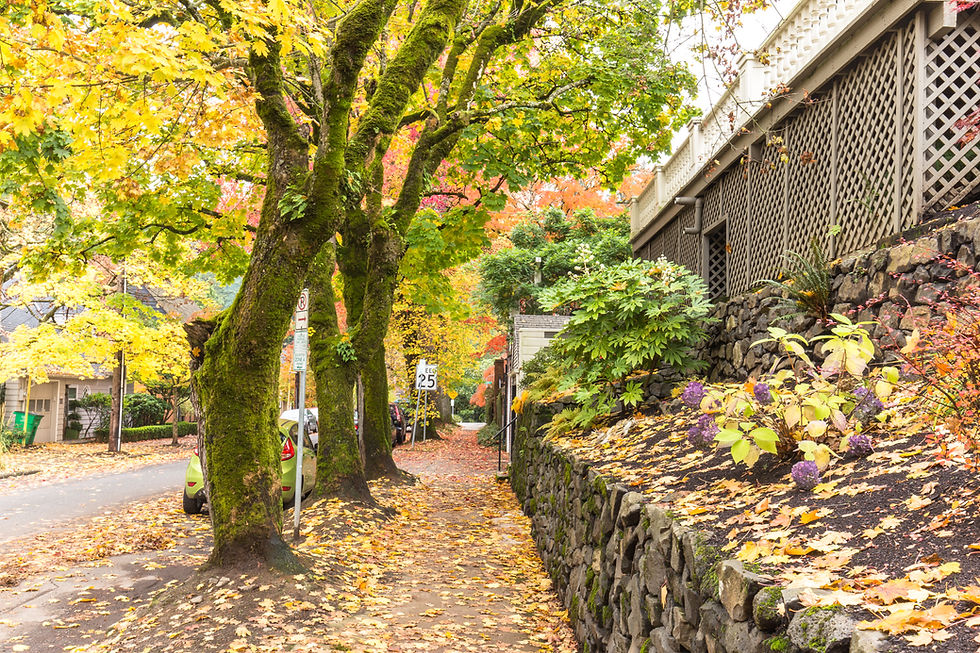
Ladd's Addition
Historic planned grid | Heritage buyers, long-hold families | Low churn, high loyalty
Ladd's Addition is Portland's only full historic planned neighborhood, with diagonal streets, central rose garden circles, and a canopy of mature trees that makes it feel like its own small town. Homes here rarely hit the market, and the buyers who wait for them understand the long game. The real story is churn: owners stay for years or decades, and the neighborhood's identity barely budges through cycles. You are not buying a speculative play; you are buying a stable, heritage-driven asset with strong schools and easy access to Division and Hawthorne. The trade-off is cost and constraint: higher entry prices, historic guidelines on alterations, and few chances to buy into the area at a discount.
Historic planned grid | Heritage buyers, long-hold families | Low churn, high loyalty
Ladd's Addition is Portland's only full historic planned neighborhood, with diagonal streets, central rose garden circles, and a canopy of mature trees that makes it feel like its own small town. Homes here rarely hit the market, and the buyers who wait for them understand the long game. The real story is churn: owners stay for years or decades, and the neighborhood's identity barely budges through cycles. You are not buying a speculative play; you are buying a stable, heritage-driven asset with strong schools and easy access to Division and Hawthorne. The trade-off is cost and constraint: higher entry prices, historic guidelines on alterations, and few chances to buy into the area at a discount.
Ladd's Addition
Resilient main street | Mixed households, walkability-first buyers | Car-light, close-in
The close-in Hawthorne and Belmont corridor is one of Portland's most resilient main streets, and well-located homes here draw deep demand. On the residential streets, you see old-Portland foursquares, bungalows, and small plexes; on the arterials, you see a retail ecosystem that has survived multiple cycles—bookstores, long-running restaurants, specialty shops—plus food carts and infill. Buyers come here for walkability, bike access, and the ability to live car-light while still feeling like they're in a neighborhood rather than downtown. As an investment, Hawthorne/Belmont is less about surprise upside and more about defensive strength: durable value, deep demand, and a bench of renters if life pivots.

Hawthorne and Belmont Corridor (close-in)
Mixed-use middle ground | Urban-minded owners, small-plex buyers | Flexible zoning
Kerns sits just north of Burnside and between Laurelhurst and inner Northeast, and functions as Close-In Eastside's mixed-use middle ground. Housing runs from older single-family homes to small plexes and condos, with pricing a notch under Ladd's but squarely in "close-in premium" territory. The 28th Avenue corridor delivers restaurants, bars, and services, effectively giving residents a second main street that is less touristy than Hawthorne but just as functional day to day. Zoning allows for more housing types than strictly single-family districts, which supports both long-term rentability and incremental infill. For buyers, Kerns offers more flexibility: you can own a house, a plex, or a condo and still plug into the same central grid. The catch is noise—this is active, urban living, not a sleepy historic district.

Kerns and 28th Avenue

Close-In Eastside investment reality
Close-In Eastside forces a choice between heritage, main-street energy, and flexible mixed-use blocks. Ladd's rewards patience and long holds; Hawthorne and Belmont reward buyers who want resilient retail and walkability; Kerns rewards those who value flexibility and adjacency to multiple job corridors. None of these are "cheap"—they are about protecting and compounding established value.
Hawthorne and Belmont Corridor (close-in)
Resilient main street | Mixed households, walkability-first buyers | Car-light, close-in
The close-in Hawthorne and Belmont corridor is one of Portland's most resilient main streets, and well-located homes here draw deep demand. On the residential streets, you see old-Portland foursquares, bungalows, and small plexes; on the arterials, you see a retail ecosystem that has survived multiple cycles—bookstores, long-running restaurants, specialty shops—plus food carts and infill. Buyers come here for walkability, bike access, and the ability to live car-light while still feeling like they're in a neighborhood rather than downtown. As an investment, Hawthorne/Belmont is less about surprise upside and more about defensive strength: durable value, deep demand, and a bench of renters if life pivots.
Kerns and 28th Avenue
Mixed-use middle ground | Urban-minded owners, small-plex buyers | Flexible zoning
Kerns sits just north of Burnside and between Laurelhurst and inner Northeast, and functions as Close-In Eastside's mixed-use middle ground. Housing runs from older single-family homes to small plexes and condos, with pricing a notch under Ladd's but squarely in "close-in premium" territory. The 28th Avenue corridor delivers restaurants, bars, and services, effectively giving residents a second main street that is less touristy than Hawthorne but just as functional day to day. Zoning allows for more housing types than strictly single-family districts, which supports both long-term rentability and incremental infill. For buyers, Kerns offers more flexibility: you can own a house, a plex, or a condo and still plug into the same central grid. The catch is noise—this is active, urban living, not a sleepy historic district.
How Grand Union Helps
.png)
Close-In Eastside investment reality
Close-In Eastside forces a choice between heritage, main-street energy, and flexible mixed-use blocks. Ladd's rewards patience and long holds; Hawthorne and Belmont reward buyers who want resilient retail and walkability; Kerns rewards those who value flexibility and adjacency to multiple job corridors. None of these are "cheap"—they are about protecting and compounding established value.
Tier 1 is Ladd's Addition: highest heritage premium, tightest supply, and low churn with appreciation driven by scarcity and identity.
Tier 1.5 is the close-in Hawthorne/Belmont corridor: slightly lower medians, but powerful main-street resilience and deep buyer and renter demand.
Tier 2 is Kerns and the 28th Avenue spine: strong, but more mixed-use and zoning-flexible, with opportunities in small plexes and condos as well as houses.
Your fit depends on whether you prioritize historic character, everyday walkability, or housing-type flexibility—and how long you plan to stay put.
Comparison Table
Neighborhood | Median Price | Appreciation | Vibe | Best For |
|---|---|---|---|---|
Kerns | $555k · 37 sales | Too few sales to call | Mixed-use, urban, lively | House hackers, small-plex buyers |
Richmond | $620k · 157 sales | −3.1% (6-mo) | Cafes, bikes, older housing stock, dense amenities | SE loyalists trading up from farther east |
Hosford-Abernethy (incl. Ladd’s) | $710k · 97 sales | −5.6% (6-mo) | Heritage streets, high character, strong identity | Long-hold households, heritage-focused buyers |
Neighborhood files: Buying in Kerns · Selling in Kerns · Buying in Ladd’s Addition · Selling in Ladd’s Addition
Compare Portland neighborhoods: Portland home prices by neighborhood

Why Work With Grand Union
We help you navigate them with context, honesty, and a strategy built around your life, not just the market.
Why Work With Grand Union
We help you make the next move with context, honesty, and a strategy built around your life, not just the market.
Story-first. NOT transaction-first
Your goal, timing and risk tolerance drive the plan, not the listing cycle.
Region- and neighborhood-specific strategy
Pricing, timing, inventory, and trade-offs change block by block. We help you read the local picture.
Clarity when it counts
You'll get the full truth on trade-offs before you're on the hook.
Why Work With Grand Union
We help you navigate them with context, honesty, and a strategy built around your life, not just the market.
Why Work With Grand Union
We help you navigate them with context, honesty, and a strategy built around your life, not just the market.
Story-first. not transaction-first
Your goal, timing and risk tolerance drive the plan, not the listing cycle.
Region- and neighborhood-specific strategy
Region- and neighborhood-specific strategy
Clarity when it counts
You'll get the full truth on trade-offs before you're on the hook.


Story-first. NOT transaction-first
Your goal, timing and risk tolerance drive the plan, not the listing cycle.
Region- and neighborhood-specific strategy
Pricing, timing, inventory, and trade-offs change block by block. We help you read the local picture.
Clarity when it counts
You'll get the full truth on trade-offs before you're on the hook.
Every deal gives back
A portion of every commission supports our Community Partners: Proud Ground (affordable homeownership) and Outdoor School (science education).
Why Work With Grand Union
We help you make the next move with context, honesty, and a strategy built around your life, not just the market.
Copyright (c) 2026 Grand Union

Buy, sell, or invest with a team that knows the house, the block, and the stakes behind the deal.
Grand Union brings local context, disciplined strategy, and a commitment to leaving something useful behind.
Copyright (c) 2026 Grand Union
Stories Behind the Sold Sign
From the Grand Union blog: deep dives on deals, neighborhoods, and strategies that build both equity and community.


Still Not Sure Where to
Start? Contact Us.
Ready to embark on your real estate journey? Contact us today to schedule a consultation with one of our experienced agents.
FAQs
Why is the Close-In East Side so expensive?
Walkability, culture, and long-term desirability tend to keep demand strong.
Is it still worth buying here in 2026?
For many lifestyle buyers and long-hold investors, yes—if the monthly cost and maintenance reality align.
What are the typical trade-offs?
Higher price, smaller lots, older housing stock, and more competition.
How should I think about investment strategy here?
Often as a stability play (durable demand) rather than max immediate cash flow.
What’s the best way to avoid buyer regret?
Choose the neighborhood for your daily routine first, then choose the house.
Buy, sell, or invest with a team that knows the house, the block,
and the stakes behind the deal.
Good real estate should protect the client and strengthen the place.
Whether you are buying, selling, or investing, Grand Union brings local context, disciplined strategy, and a commitment to leaving something useful behind. Read More ->
Copyright (c) 2026 Grand Union
Copyright (c) 2026 Grand Union
Buy, sell, or invest with a team that knows the house, the block, and the stakes behind the deal. Grand Union brings local context, disciplined strategy, and a commitment to leaving something useful behind. Read More ->
Copyright (c) 2026 Grand Union